The infamous “they” tell you to be authentic in your content.
Be yourself. Show your personality. Let people get to know the real you.
Great advice. Completely useless without the how.
Because if you’re like most small business owners I talk to, you have a fantastic personality in real life.
You’re easy to talk to, you tell great stories, people genuinely enjoy spending time with you.
But then you sit down to write a post and something happens.
The real you evaporates. What comes out instead sounds like a press release.
Or worse…like every other business owner in your space.
You know it’s happening. You just don’t know how to stop it.
Grab your coffee. This is exactly what we’re going to work through today.
Why ‘Just Be Yourself’ Doesn’t Work
The problem with ‘be authentic’ as advice is that it assumes you already know what your authentic content voice looks like on the page.
Most people don’t. Not because they lack personality, but because they’ve never stopped to identify what specifically makes them sound like them.
Think about the business owners you follow whose content you love.
There’s something consistent about them. A phrase they always use, a topic they keep coming back to, or a way of framing things that just feels distinctly theirs.
You’d recognize their writing anywhere.
That’s not an accident. And it’s not just charisma leaking through the screen.
Those are the things that make them distinctly them, and they work because they’re specific, consistent, and intentional.
The good news is you already have them. You just haven’t named them yet.
Once you do, using them on purpose becomes the easiest part of content creation you’ve ever done.
So What Actually Makes You YOU in Your Content?
The things that make you YOU in your content are any recurring elements that make your posts sound distinctly like you. The stuff that would feel wrong coming from anyone else in your industry.
These YOU things show up in a few different ways.
Some are language-based, specific words or phrases you naturally reach for. Others are reference-based, the things you keep coming back to as examples. And some are structural, the way you tend to open a post or close an email.
A few examples to make this concrete:
- A specific word you use all the time that your audience starts to associate with you.
- A recurring reference that keeps showing up in your content (morning coffee, a particular hobby, a place you love).
- The way you talk about your clients or your process that nobody else frames quite the same way.
- A signature question you ask, or a signature way you open a topic.
For me, coffee shows up everywhere. Not because I planned it that way, but because coffee is genuinely part of how I think and how I work.
Once I noticed that pattern, I leaned into it. Now it’s part of what makes GinAdmin feel like GinAdmin.
Your markers are already in your content. We just need to pull them out and make them intentional.

How to Find Your Own Markers
Finding what makes you YOU starts with looking backward before you look forward.
Pull up ten pieces of content you’ve already created, posts, emails, whatever you have.
Read through them with fresh eyes and ask yourself these questions.
- What words or phrases show up more than once? Not industry terms. The ones that feel like yours.
- What do you keep coming back to as examples? Do you always use sports references? Food analogies? Something from your morning routine?
- How do you naturally open things? Do you tend to start with a question? A small observation? Or a direct statement?
- What topics do you get seriously fired up about, not because you think you should, but because you actually care?
Write down everything you notice. You’re not editing here, just collecting.
Most people find three to five strong markers in a ten-minute exercise like this. Those are your anchors.
Once you have them named, using them on purpose is straightforward. Before you write anything, glance at your list. Look for a natural spot to let one of them show up.
Not forced or jammed in. Just given room to appear.
Why Consistency Is the Whole Point
What makes you YOU only works when they show up consistently.
One coffee reference in one post doesn’t build a brand.
But coffee showing up across your blog, your emails, your social posts, your sign-off?
Now your audience starts to associate that with you.
This is how recognizable voices get built.
Not by trying harder to be interesting, but by being deliberately consistent about the things that are already interesting about you.
It also solves one of the biggest content creation struggles I hear: sounding different every time you post.
When you have a short list of your YOU things you’re working from, every piece of content has a thread connecting it back to you.
Your Tuesday post sounds like the same person who wrote your Friday post.
And your email sounds like the same person who writes your blog.
That consistency is what makes people feel like they know you. And people buy from people they feel like they know.
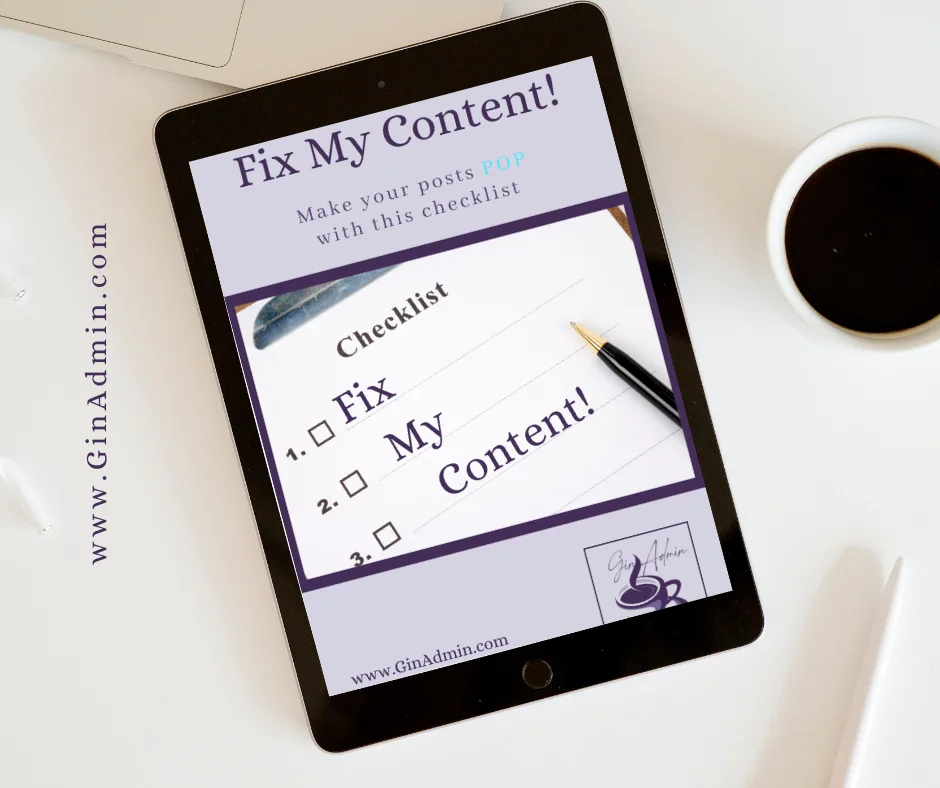
Once you’ve figured out what makes you YOU, a good next step is running your content through the Fix My Content Checklist before you publish. It’s a five-minute check that catches the spots where your YOU-ness is getting lost before your audience ever sees it.
Putting It to Work
Before you hit publish on your next post, run it through the Coffee Shop Test. Read it out loud and ask: would I actually say this to a friend over coffee?
If something sounds stiff or generic or like it could have come from anyone, that’s usually a signal that your YOU things didn’t make it into that section.
Go back in and find the spot. Add the phrase you’d naturally use. Swap the generic example for the one that’s actually yours.
Let the real version of you show up on the page.
It gets faster every time. After a few rounds of doing this intentionally, those markers start showing up on their own.
You stop having to think about it because it becomes the way you write.
That’s when content creation stops feeling like performing and starts feeling like just talking to the people you want to work with.
Which, honestly?
Is exactly what it should be.
Grab your coffee…you’ve got this.