Well, a content autopsy is a weird way to start the year. But here we are…
You know that post you were really proud of?
The one where you gave solid advice, picked a good image, actually edited the caption instead of just hitting post?
And it disappeared into deep space where even Captain Kirk couldn’t find it?
Nobody engaged. Nobody commented.
Meanwhile, that quick post you threw together while your coffee was brewing? The one you almost didn’t publish?
That’s the one people responded to.
And you’re sitting there with your coffee going, Wait…what am I missing here?
If you’ve ever looked at your analytics wondering why the post you felt good about did nothing while random posts got attention, here’s what I want you to know.
Those posts that didn’t work? They’re not mistakes.
They’re information. They’re research.
Most small business owners treat content that doesn’t perform like something we need to forget about quickly.
We scroll past it fast. We definitely don’t analyze it. We just move on and hope the next one does better.
But what if those posts are actually showing you exactly what your audience doesn’t want?
That’s information you just can’t get any other way.
Why Good Content Sometimes Goes…Nowhere
Let me save you a lot of frustration.
Your content didn’t go nowhere because it wasn’t good enough.
It went nowhere because something was off. Maybe it wasn’t right for your audience. Or maybe the timing was wrong. Maybe the platform didn’t fit the format.
And those are three different problems that need three different solutions.
When you create content based on what you THINK should work instead of what your actual data shows you, you’re guessing.
You’re following formulas. Copying what worked for someone else. Posting at the “right” time with the “right” approach.
Sometimes it works. Sometimes it doesn’t.
And when it doesn’t, most people just try again without figuring out why, instead of doing a content autopsy.
a Content Autopsy Looks at What Actually Happened
So how do you figure out WHY content doesn’t work without spending hours inside your analytics or needing a marketing degree?
You do what I call a content autopsy.
Sounds dramatic, but really it’s just looking at what happened and figuring out why.
And I’m going to walk you through exactly how I do this.
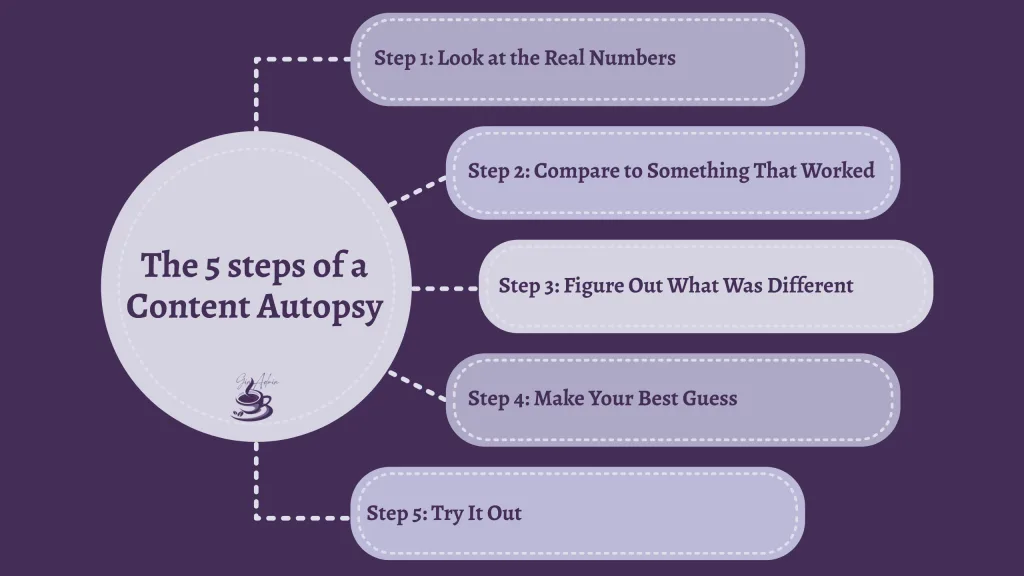
Step 1: Look at the Real Numbers (5 minutes)
Pull up your analytics on that post that didn’t work.
But skip the likes. Look at the metrics that actually tell you something:
Scribble these down somewhere. Doesn’t have to be fancy. Just somewhere you can see them.
Step 2: Compare to Something That Worked (3 minutes)
Now pull up a post that DID work. One that got the response you wanted.
Look at those same numbers and scribble those down.
The difference between these two? That’s what you’re looking for.
Step 3: Figure Out What Was Different (7 minutes)
This is the part where it gets interesting.
Look at everything that was different between these two posts:
- What were they about? Was one teaching something while the other was telling a story?
- What did they look like? Professional photo vs phone photo? Carousel vs single image?
- How did they sound? Formal vs casual? Long caption vs short?
- When did you post them? Morning vs evening? Monday vs Friday?
- What did you ask people to do? Clear call to action vs just sharing information?
This step in the content autopsy matters. Don’t rush through it.
Step 4: Make Your Best Guess (2 minutes)
Based on what you noticed, what do you think happened?
Maybe your audience likes stories better than tips. Or they’re scrolling at night, not in the morning. Do they want short and direct instead of detailed explanations?
Scribble this down, too. Make it specific.
“My audience seems to prefer behind-the-scenes posts” is better than “they like authentic content.”
Step 5: Try It Out (Ongoing)
Now create a few posts that test what you think you learned.
- If you think timing matters, post at different times and see what happens.
- If you think format matters, try different types of posts.
- If you think topic matters, create more of what seemed to work.
One test won’t tell you much. But after three or four, you’ll start seeing if you were right.
What Content That Didn’t Work Is Showing You
When you start paying attention to the posts that don’t perform, you realize something:
When content doesn’t work, it’s usually showing you the gap between the audience you think you have and the audience that you actually have.
Maybe you’re creating tactical, strategic posts because you think that’s what small business owners need.
But your audience might actually respond more to the real, unfiltered reality of running a business.
Or maybe you’re sharing behind-the-scenes content because everyone says authenticity is what people want.
But your specific audience might actually prefer quick, actionable tips they can use right away.
Your content that doesn’t work shows you:
- What your audience isn’t that interested in (even if you think they should be)
- The times or days don’t work for them (regardless of what the articles say)
- What format they tend to skip (even if it’s popular in your industry)
- The tone doesn’t connect with them (even if it’s professional and polished)
Once you know what doesn’t work, you can stop spending time on it.
The Patterns You’ll Start Noticing
Most small business owners look at their analytics once, shrug, and keep going.
But a content autopsy isn’t about individual posts. It’s about patterns.
After you do this a few times, you’ll start seeing things like:
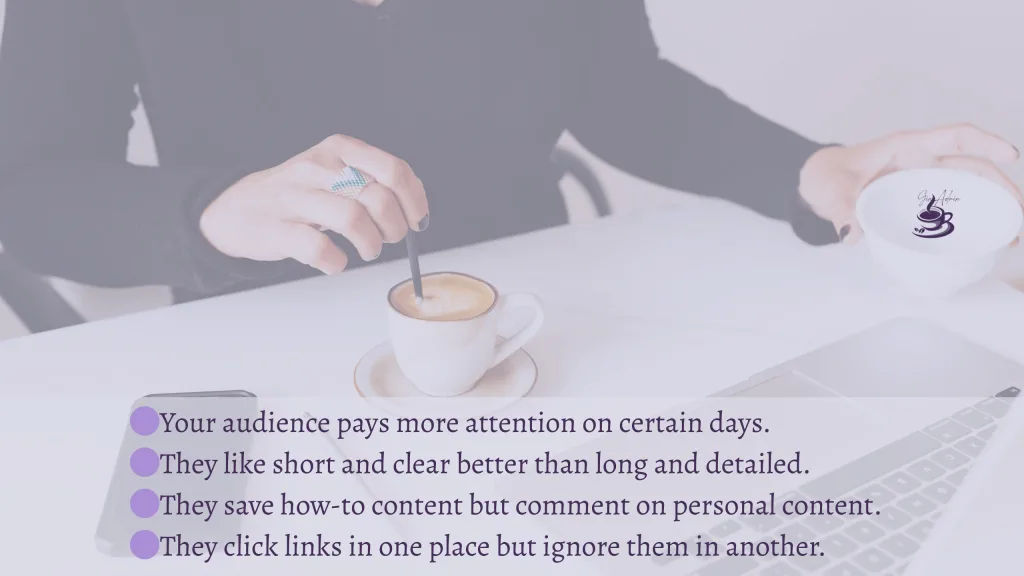
These patterns? This is your actual content strategy.
Not based on what some article said. Not based on what works for someone else.
Based on what YOUR audience is showing you that they respond to.
How to Actually Use What You Learn
Okay, so you’ve looked at your posts. You’ve noticed some patterns. You’ve figured some things out.
Now what?
Here’s where people mess up: they try to change everything all at once.
Don’t do that.
Pick one thing to adjust. Test it. See what happens.
Maybe you noticed your audience likes casual language better than business speak.
Good. Try that in your next few posts and track the results.
Maybe you realized people engage more when you share specific examples.
Perfect. Do more of that.
Maybe you figured out that your audience doesn’t actually care about the behind-the-scenes content you’ve been creating.
Helpful to know. Stop spending time on it.
The goal isn’t to get it perfect. It’s to get better based on real information instead of guessing.
When Content Doesn’t Work for Other Reasons
Sometimes a post doesn’t work for reasons that have nothing to do with the actual content.
Your reach was way down that day. The algorithm was being weird. You posted during a big news event when nobody was looking at regular content.
So how can you tell the difference?
- Look at your reach. If it’s way lower than usual, that’s probably a platform issue, not a content issue.
- Check your other numbers. If reach was normal but nobody engaged, that’s about the content.
- Look at your follower count. If you lost followers recently, your audience might have shifted.
See the difference? One means you need to adjust your content. The others mean something else was happening.
The Monthly Check-In
Want to make this helpful instead of just interesting?
Do a monthly review. And actually put it in your calendar.
Last day of the month. One hour. Fresh cup of coffee.
Pull up your analytics for the whole month.
Find your top 3 posts and your bottom 3.
Do quick autopsies on each one.
Look for patterns across all of them.
Write down one thing you learned that you want to test next month.
That’s it. No complicated spreadsheets. No overwhelming data. Just one clear thing that you noticed.
Do this for three months and you’ll understand your audience better than any generic strategy guide could teach you.
So…what happens when you spend years creating content?
You can waste a lot of time on things that don’t work.
Because you’re creating based on what you think SHOULD work instead of paying attention to what IS working.
You follow all the advice.
Post at the “right times”.
Use the “right formats”.
Say thing the “right way”.
And you stay stuck.
Because you’re not learning from the posts that don’t work. You’re just trying to forget about them.
Things change when you start treating posts that don’t perform as information and research instead of mistakes.
When a post gets barely any engagement, it’s teaching you something about what your audience doesn’t care about.
When a carousel gets ignored, it’s showing you your people might prefer a different format.
When a video doesn’t get views, it’s revealing when and how your audience prefers to consume content.
Every single post that doesn’t work gives you information you can’t get any other way.
my recommendation
Pick one post that didn’t work. Just one.
Spend 15 minutes looking at it using the steps laid out above. Maybe while your morning coffee is still hot.
Don’t beat yourself up about it. Don’t make excuses for it. Just look at what happened and ask why.
Then pick one post that did work. Do the same thing.
Compare them. Find what was different. Figure out what you think that means.
Then test it with your next post.
One post that didn’t work. One that did. One thing you learned. One test.
You’ll learn more from those 15 minutes than from reading ten articles about content strategy.
Because this isn’t about what works for everyone. It’s about what works for YOUR audience with YOUR content in YOUR business.
And the only way to figure that out is to pay attention to what your posts are already showing you.
Next time something you post doesn’t get the response you wanted, don’t just ignore it and move on.
Look at it. Pull up the numbers. Figure out what happened.
Because that post you’re ready to forget about just showed you something valuable about what NOT to do next time.
And knowing what doesn’t work? That’s just as useful as knowing what does.
The information is all there. You just need to look at it.
Brew it and do it!
Your content’s already telling you what works and what doesn’t. But are you actually listening? Before you analyze your next post, grab the Content Audit Checklist. It walks you through what to look for so you’re not guessing. Because knowing what to look for makes all the difference.