You started to repurpose content because everyone said it would make life easier.
Write one blog post. Turn it into ten things. Save time. Be efficient.
So you did it.
You took your killer blog post and turned it into an Instagram caption. A LinkedIn post. An email. A Facebook update.
Then you read them back.
Your Instagram caption sounds weirdly formal. Your email lost that coffee-shop vibe. And your LinkedIn post could be from anyone.
Where did YOU go?
This is the repurposing trap.
You’re being efficient, but you’re accidentally stripping away the exact thing that makes people want to work with you.
Your personality.
You don’t have to choose between saving time and sounding like yourself.
I’ve got five specific steps that will help you protect your voice through the whole process.
Grab your coffee. I’m going to walk you through exactly how.
The 5-Step System to Repurpose Content Without Losing Your Voice
Most people repurpose content by copying and pasting the same thing everywhere.
Aaaand that’s why it sounds robotic.
These five steps are different.
They’re designed to protect your personality while still saving you time.
Each step addresses one specific place where your voice disappears during repurposing.
Fix these five things, and your content will sound like you no matter which platform you’re on.

Step 1: Stop Copy-Pasting Everything, Everywhere
Your blog post about your pricing changes contains five completely different ideas:
- Why you’re raising your rates
- What clients get for the new price
- How this benefits them
- Client success stories
- Common objections you’re addressing
That’s not one piece of content.
That’s five.
Instead of taking the entire blog and squeezing it into an Instagram caption, or pasting the whole thing on LinkedIn, try a different approach.
Pull ONE idea per platform.
Instagram gets the client success story. Turn it into a carousel. Visual. Story-focused.
LinkedIn gets your professional take on why you’re raising rates. Thought leadership. Gets people talking in comments.
Email gets the behind-the-scenes of what clients get for the new price. Personal. Connection-building.
Facebook gets one quick answer to a common objection. Fast value. Addresses their concern.
Same blog post.
Four completely different pieces of content.
Each one optimized for its platform and audience.
This is how you stay efficient without everything sounding identical.
Most business owners lose their voice when they just copy the same content to every platform.
Step 2: Instagram You Is Different From LinkedIn You (And That’s Okay)
You’re not the same person in every situation.
Coffee with your best friend? Casual. Stories.
Professional networking event? Still you, but more polished. Talking business.
One-on-one with a potential client? Authentic but professional. Reading the room.
Your content works the same way.
Instagram is casual. Behind-the-scenes. Coffee cups in photos. The real you.
LinkedIn is professional networking. Insights. Business strategy. Still you, but dressed up.
Email is your one-on-one conversation. It’s the most authentic, and like you’re talking to one person you actually like.
Before you post on any platform, ask yourself:
“If I were talking to someone on this platform in real life, how would I say this?”
Then say it that way.
LinkedIn gets the professional version of your idea.
Instagram gets the casual, story-driven version.
Email gets the most conversational version.
Same message.
Different delivery based on the relationship.

Step 3: Use Templates for Structure, Not Scripts
Templates show you what elements work.
Hook. Problem. Solution. Call to action.
But templates are training wheels.
You learn the structure, then you take them off and ride all by yourself.
The problem is when people never take them off.
Every post follows the exact same formula, uses the exact same language.
“Are you struggling with [insert problem]? Try this [insert solution]. Link in bio for more.”
That sounds like a content robot.
Know what elements make good content.
But fill those elements with YOUR words, YOUR stories and YOUR perspective.
Instead of: “Are you struggling with content creation?” Say: “It’s 9 PM and you still don’t know what to post tomorrow, do you?”
Instead of: “Try this actionable tip” Say: “This worked when I was drowning in the same problem”
Same structure. Completely different voice.
Templates keep you consistent.
Your personality keeps you interesting.
Step 4: Batch Smart (With Breaks)
You blocked off four hours on Sunday afternoon.
Your plan is to knock out all your repurposed content in one session.
LinkedIn post. Done.
Instagram caption. Done.
Email newsletter. Done.
Facebook post. Done.
By hour three, you couldn’t remember what you’d already written.
Everything started sounding the same.
Your brain felt like pudding.
That’s production mode…efficient but soulless.
You’re checking boxes, but you’re not creating connection.
Here’s a different way:
Monday morning (15 minutes): Read your blog. Pull out 3-4 different angles.
Tuesday (30 minutes): Write your LinkedIn post. Just that one thing. Fresh brain.
Wednesday (30 minutes): Create your Instagram piece. Different day. Different energy.
Thursday (30 minutes): Draft your email. You’re not exhausted yet.
Friday (15 minutes): Quick Facebook post. One tip. Done.
Same amount of time total.
Spread across the week with breaks in between.
A fresh brain for each piece means each piece sounds like you created it with intention.
Because you did.
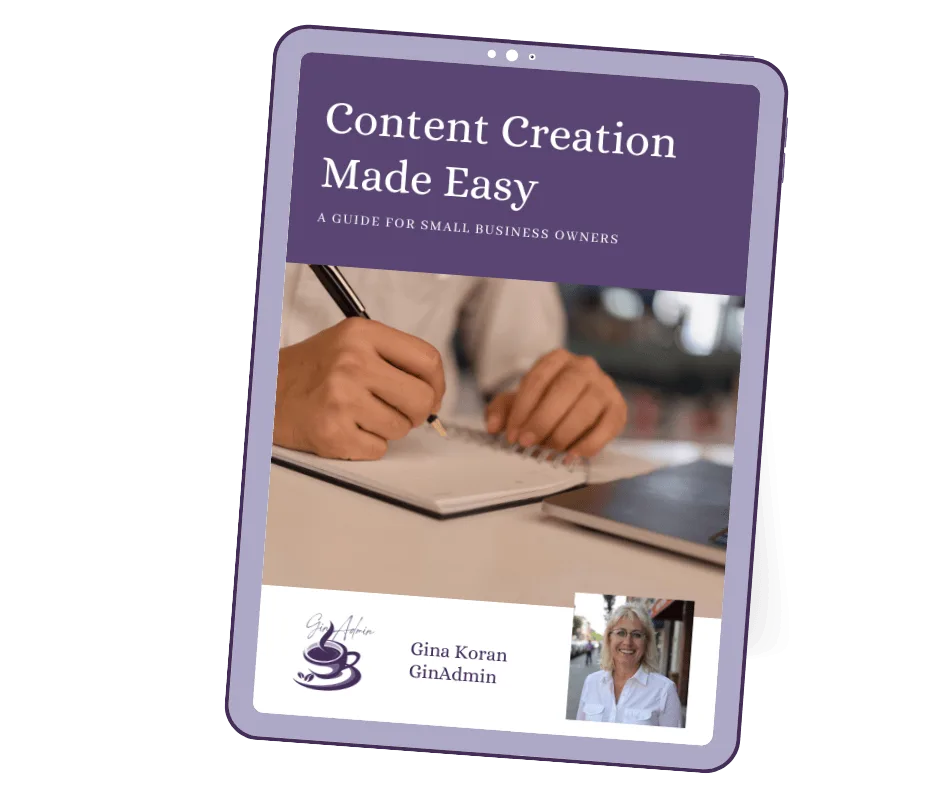
Want the complete framework for keeping your personality intact when you batch? The Content Creation Made Easy Guide walks through exactly how to repurpose content without sounding like a robot.
Step 5: Run Everything Through the Coffee Shop Test
There is one tip I learned a LONG time ago.
Read it out loud before you hit publish.
Then ask: “Would I actually say this over coffee to my ideal client?”
If it sounds ridiculous out loud, it’s probably not ready to post online.
Find the exact sentence where your personality disappeared.
Usually it’s when you started using words you’d never say in real life.
“Leverage.” “Utilize.” “Implement best practices.” “Game-changing strategies.”
You don’t talk like that.
Skip writing like that too.
Your blog passed the Coffee Shop Test.
It sounded like you.
Every piece of repurposed content should pass it too.
The Coffee Shop Test eliminates robotic content before it gets published.
If it doesn’t, fix the robotic parts.
Not the whole thing.
Just the sentences where you sound like you’re trying too hard to sound professional.
Then try again.
How to Repurpose Content
You wrote a blog post about your new service offering.
It’s good.
People are reading it.
So, now what?
Tuesday morning with your coffee, you pull up that blog and read through it looking for the different parts.
There’s that section where you explained why you created this service.
That’s the story people will connect with.
You turn that into an email.
Keep it conversational.
End with a link back to the full blog post.
Schedule it to send Thursday.
Wednesday, you’re looking at your blog again.
This time you pull out the part where you talked about what makes your approach different from competitors.
That’s going to get people thinking.
You turn that into a LinkedIn post.
Professional tone, but still you.
You’re not afraid to show what sets you apart.
End with a question in the comments.
Schedule it for Friday.
Thursday afternoon, you’ve got 30 minutes.
You pull one specific benefit from your new service offering.
The thing that solves their biggest headache.
You turn that into a quick Facebook post.
Short. Clear.
“This is how it helps you.” Done.
Friday morning, you open Instagram.
You create a carousel about the five signs someone needs this service.
You pull those signs from different parts of your blog.
Each slide is visual.
Problem-focused.
Not trying to sell the whole service, just showing who it’s for.
One blog post. One week.
Five different pieces of repurposed content.
None of them sound the same.
All of them sound like you.
Because you didn’t copy-paste.
You didn’t rush through it.
Instead, you created each piece with intention for its specific platform and audience.

Frequently Asked Questions About Content Repurposing
How do I repurpose one blog post across multiple platforms?
Start with your blog post as the foundation. Extract different angles for different platforms: Instagram gets the client story, LinkedIn gets the professional insight, email gets the behind-the-scenes process, Facebook addresses common objections. Each platform showcases a different piece of the same core message.
What’s a multi-platform content strategy for small businesses?
A multi-platform content strategy uses one piece of core content (usually a blog post) and adapts it for 3-5 platforms based on where your audience is. Focus on quality over quantity. Better to do 3 platforms well than 7 platforms poorly.
How do I optimize content for different platforms without losing my voice?
Use the Coffee Shop Test for every platform. Before you post, ask: “Would I say this over coffee?” If yes, your voice is intact. Platform optimization is about format and length, not changing your personality.
What’s a content distribution strategy without overwhelm?
Create one comprehensive piece of content, then use the 5-Step Repurposing System to adapt it strategically. Batch the repurposing in one session. Small businesses using this approach save 5+ hours per week on content creation.
Grab your coffee and pick one blog post you’ve already written.
One where your voice really comes through.
Read it with your coffee and find three different angles:
- A story you told
- A system you explained
- An opinion you shared
This week, adapt just ONE of those angles for ONE platform.
Now, read it out loud before you hit publish.
Then ask yourself: “Does this still sound like me? Or like I’m trying to sound like a professional content creator?”
If it sounds like you, publish it.
If it doesn’t, find where your personality went missing and rewrite just that part.
Then next week, do it again with a different angle and a different platform.
Repurposing works when you protect your voice through the whole process.
Your content should sound like you, whether it’s an 800-word blog post or a 280-character tweet.
Grab your coffee…You’ve got this!